

Extending the potential of the cajon
I think that because a cajon is such a blindingly simple instrument, it seems that nobody has really investigated the potential to extend the development of the fundamentals. Screw a playing face on the front of a box, and you are done.
I feel that most cajons are built with a similar intent to plastic ukuleles. So few people know what a good ukulele should sound like that they assume that all ukuleles are colourful novelty instruments. Most commercially available cajons in music stores in Australia are monodimensional and lacking any complexity of tone. They are boxes made from cheap materials with fancy patterns painted on them, and they sound like cheap boxes with fancy patterns painted on them.
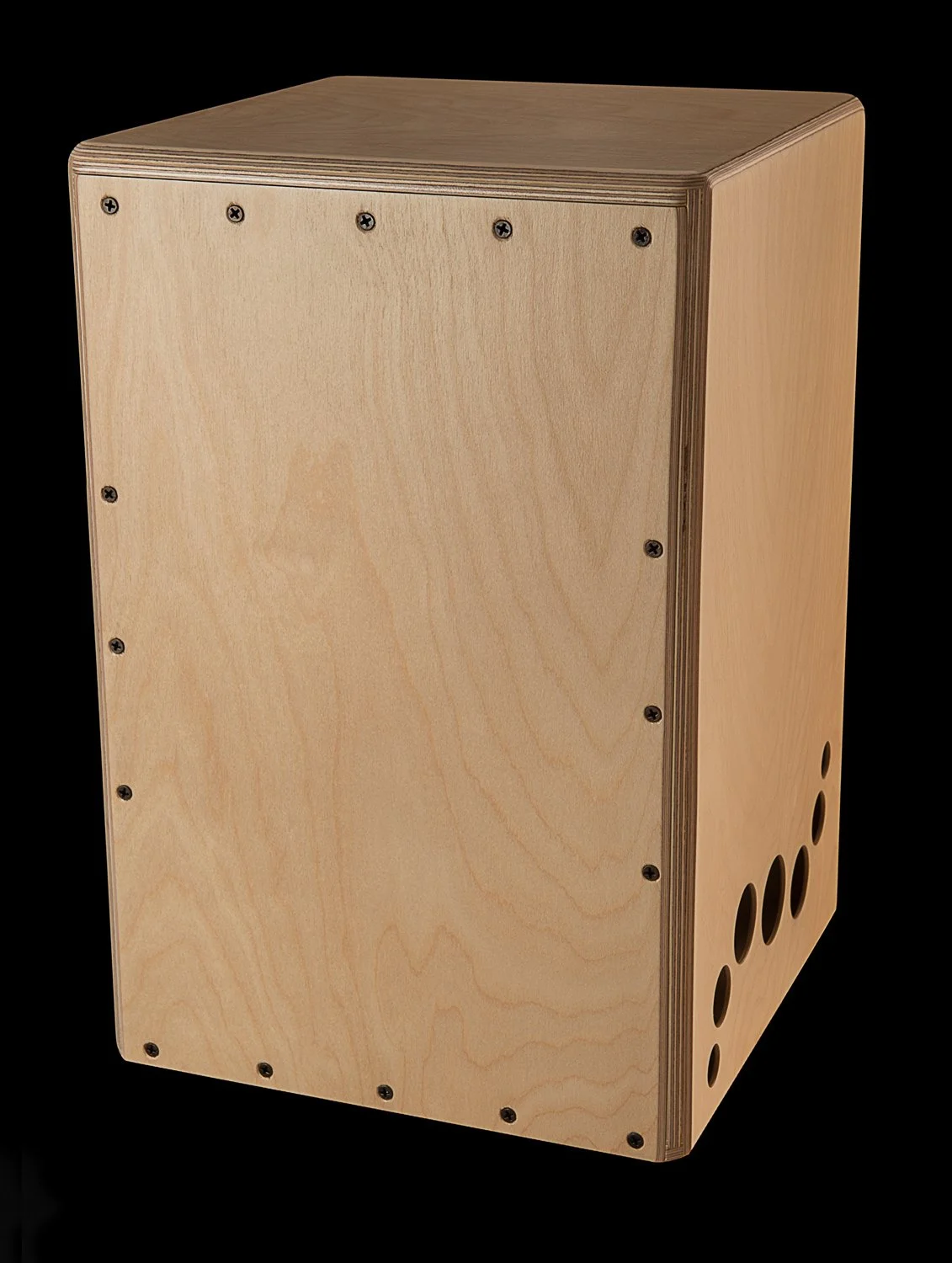
I clearly remember at the start of my instrument-making, sitting in my workshop looking at a cajon and asking; what are the key aspects that really make this thing work? It seems so obvious, you sit on it, and hit the front, the sound energy reverberates around the inside of the box, and that’s that. While this is true, I have found so much more potential in the simple premise of a box drum.
My approach is similar in principle to the design of race cars. The car combines a chassis and a roll cage as an ultra-stiff integrated structure. The chassis stiffness can resist most of the huge forces being exerted onto the car, forcing the suspension to do its job of keeping the tyres in contact with the ground. The chassis reflects the energy into the appropriate moving parts to make the most efficient outcome.
An instrument is a machine that converts the energy put into it by the player into what we hear as tone, volume and sustain. An efficient instrument can retain energy in the playing face longer and impart more energy into the sound chamber. All of my instrument design is based around a light-weight, stiff chassis that manages the bulk of the forces being applied to the instrument by the strings or the player. The soundboards and playing faces are free to vibrate as they are not contributing to the structural integrity of the instrument.
The full weight of the player will minimally compress the body of a regular cajon, ever so slightly slackening the front face. I believe this will have an effect on the way the energy can react with the surface. Then the energy moving to the edge of the playing face doesn’t have adequate resistance, so it can dissipate into the thin sides of the box structure.
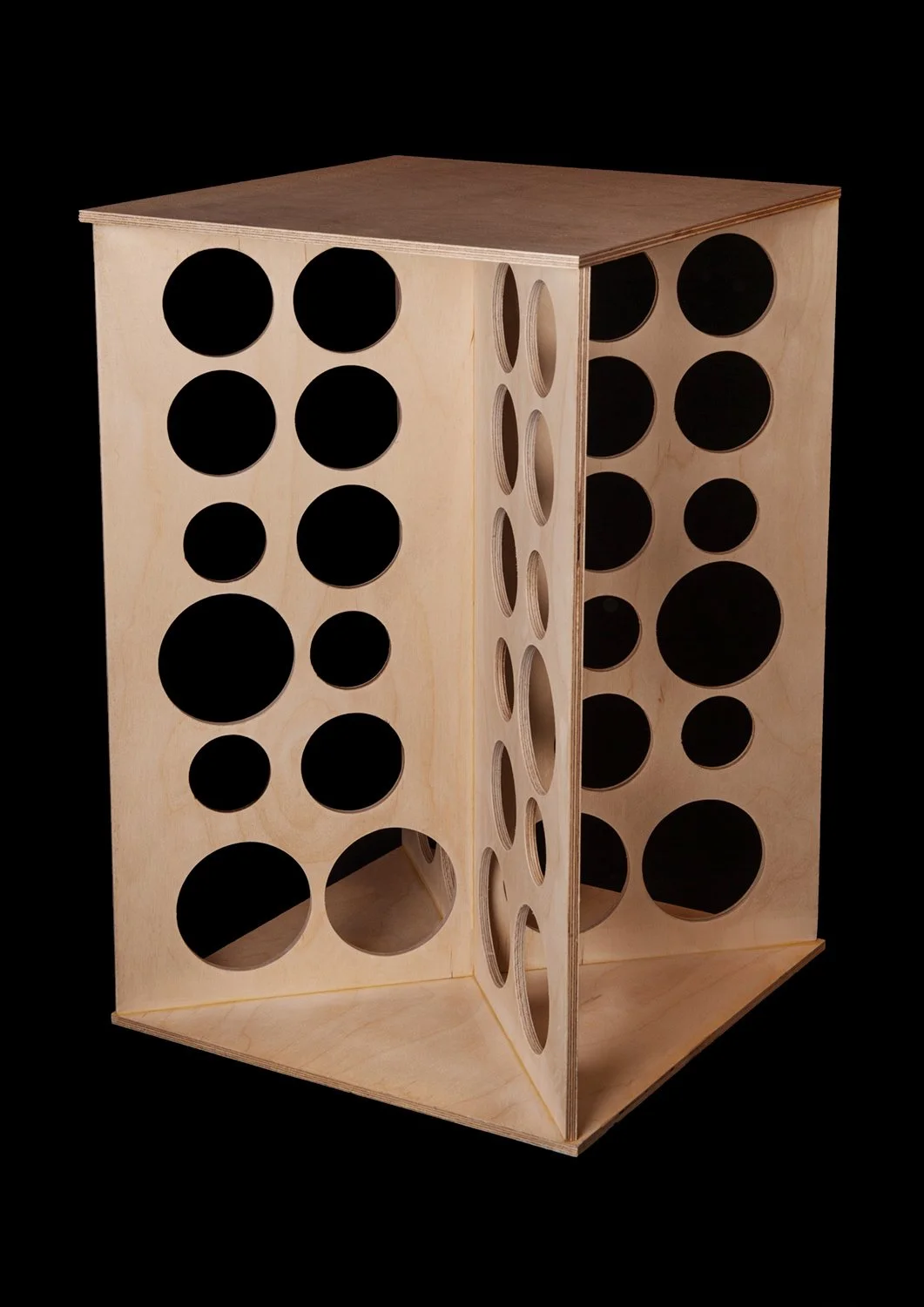
My X chassis design is the same weight as a traditionally built instrument, but it is a significantly more rigid structure. A player of virtually any weight won't create deflection in the playing faces. The substantial resistance from the contact points on the chassis reflects the energy keeping the face vibrating. These gains of structural energy retention, combined with the use of A-grade materials, create conditions for energy to be conducted and retained for longer in the playing face and sound chamber.
This creates a response from a cajon that is more like the tonal response expected from a skinned instrument. There are various distinct playing zones on the playing face and obvious improvements in the diversity and quality of tone. My instruments are a more efficient evolution of the cajon, while still covering all of the requirements of a traditional instrument.
One of the exciting byproducts of the X chassis comes from the fact that the sides are no longer the primary structure of the instrument. Without any compromise or additional weight, any of the four sides can be a primary playing face. The obvious next step was to work out how to tune them to each other, and which order to place them around the instrument. Another benefit is that the sides that are not being played act as soundboards, vibrating in sympathy and generating greater harmonic complexity. The resulting instrument has either 4 or 5 powerful, tuned playing faces, in the same weight and footprint as a standard single-faced drum.
My multi-faced cajons are a hybrid with immense melodic potential. The tonality varies across each face in the same way a conga or bongo does, each with harmonic complexity.
My instruments have rounded touch points, are ergonomic to play and have a vast range of tones from rich bass up to sharp snaps. All of this is possible because of the integrity created by the chassis.
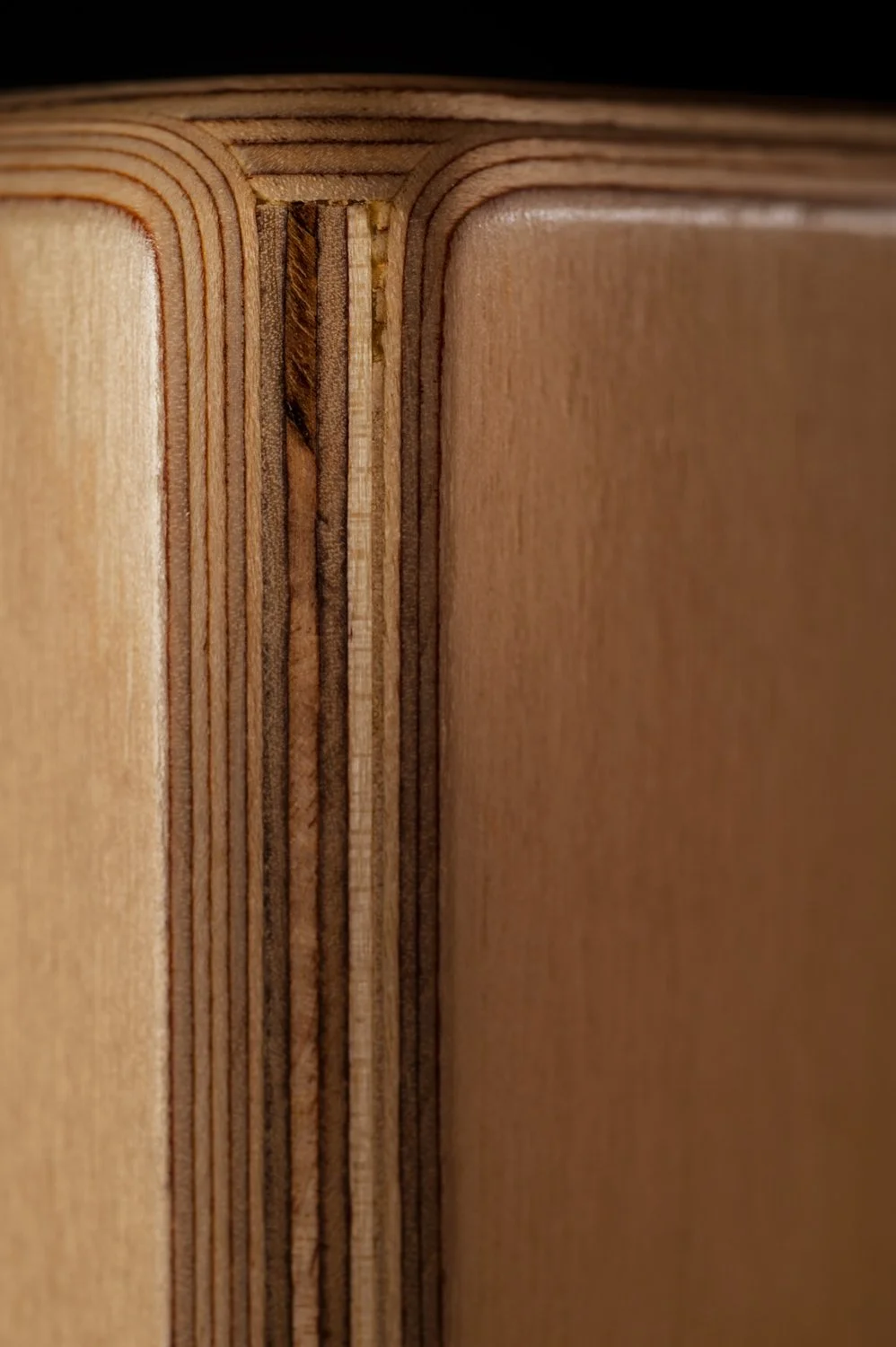
Photography: eyefood Andy Rasheed