

Discovering that I was an adaptive instrument maker.
The Promise
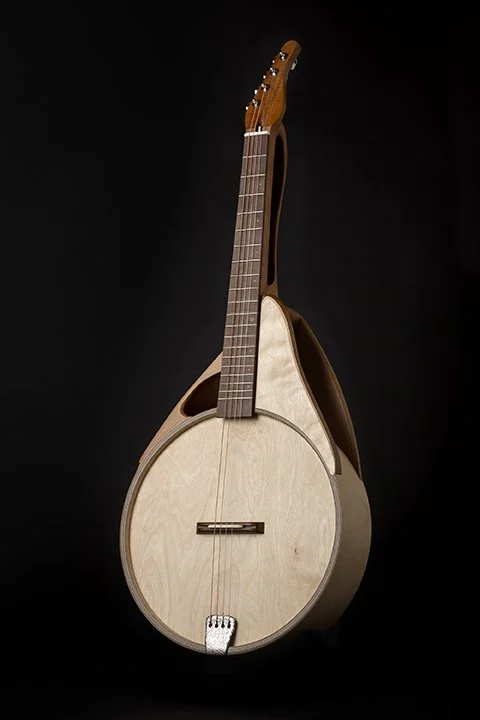
I received an enquiry from a gentleman in the US who asked me if I could modify an Appalachian dulcimer. I asked him why he wanted a modified instrument, and it turned out that after health complications, he couldn’t physically manage to fret his guitar cleanly. He still had strength in his fingers to press down, but not enough to reliably fret chords.
I suggested that I could design a fretted lap-style instrument from scratch. To start with, I sent him a list of questions about his playing style, the requirements of the instrument to fit within an ensemble, and the physical attributes of the instrument to suit his playing and handling on stage.
The result was a hybrid 4-string, passive-amplified lap guitar design, which I called The Promise. This bespoke design not only gave him the optimum ergonomics for lap style playing, but also more volume and better tone than was possible from a dulcimer.
Given my extensive experimentation, designing an instrument to suit a player's physical requirements seemed relatively straightforward. I was able to cobble together various attributes of previous instruments I had made into a viable-looking design. Starting from scratch, I was able to resolve any ergonomic issues and make an instrument to fit within a specific tonal range and have adequate volume. It wasn’t until I had finished it and put up a social media post that a number of people commented about how great it was that I could make a viable instrument and allow this man to continue to make music. It twigged then that other people might also be making instruments specifically for people with disability, and with some investigation, I found out that they are called adaptive instruments.
I was able to create a viable instrument in an unusual form because of the system I have adopted for all of my instrument-making. My designs have a separate structure, or chassis, that the playing faces or soundboards integrate onto or into. I initially found this method of building exciting because I could add more playing faces to drums without compromising tone, and I could make powerful guitars for lap steel playing. It wasn’t obvious to me back then, but this system could facilitate entirely unique shapes and configurations of instruments with unique ergonomic options. So long as I could get the playing face and soundboards to respond adequately, I could design instruments around very specific ergonomic applications.
The traveling Instrument Project
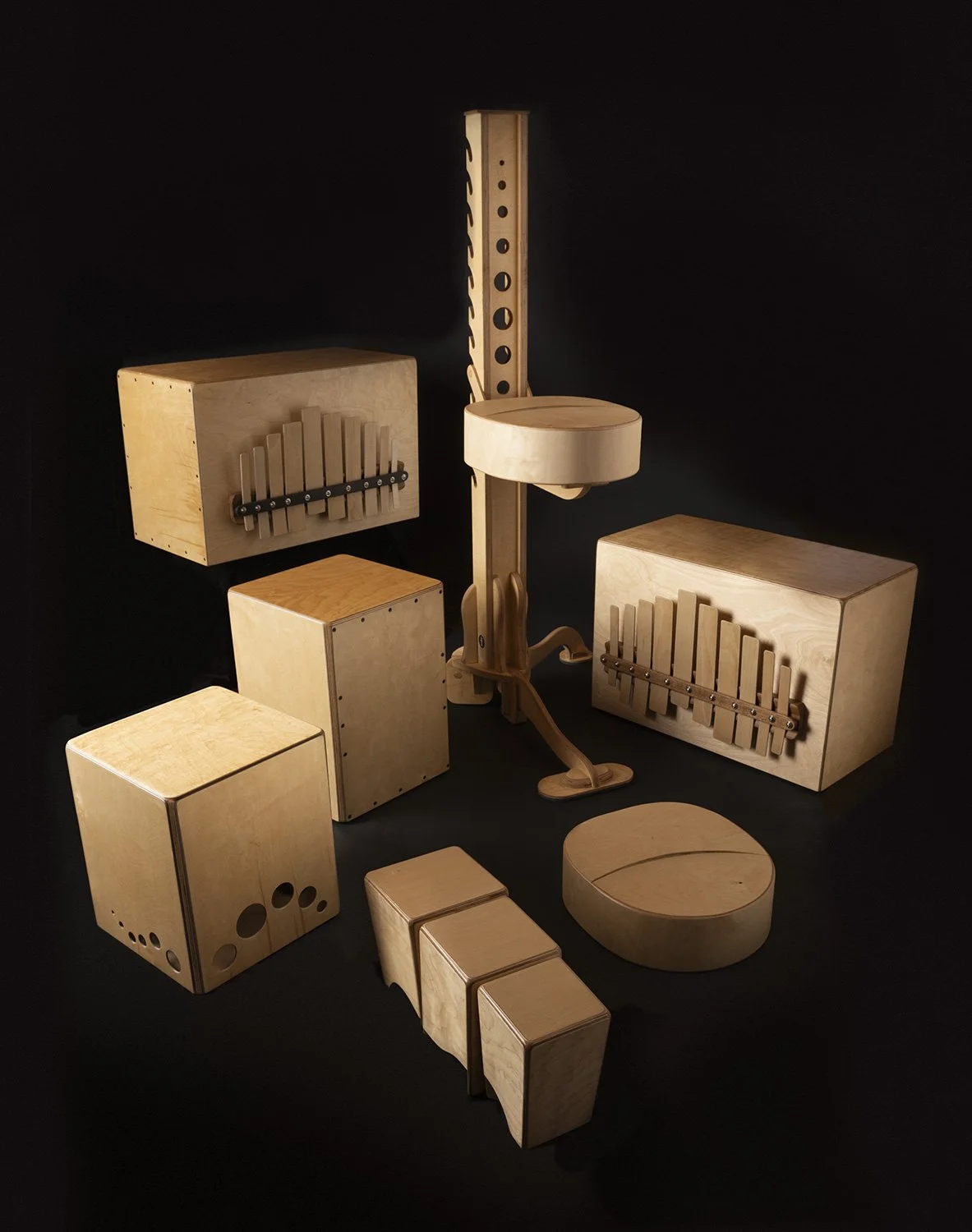
Some time later, I was commissioned to produce seven tuned, multi-faced percussion instruments for my local council, dubbed the Travelling Instruments Project. My vision was to offer the chance to have a go at percussion for as many people in the community as possible, and to remove as many barriers to entry as possible. I designed them around removing obstacles to non-players. The instruments were of varying sizes and therefore pitches, but were all tuned to themselves and to each other. Any of the instruments could be played together, and no one could hit a wrong note.
Lap Bongo Cajon Hybrid
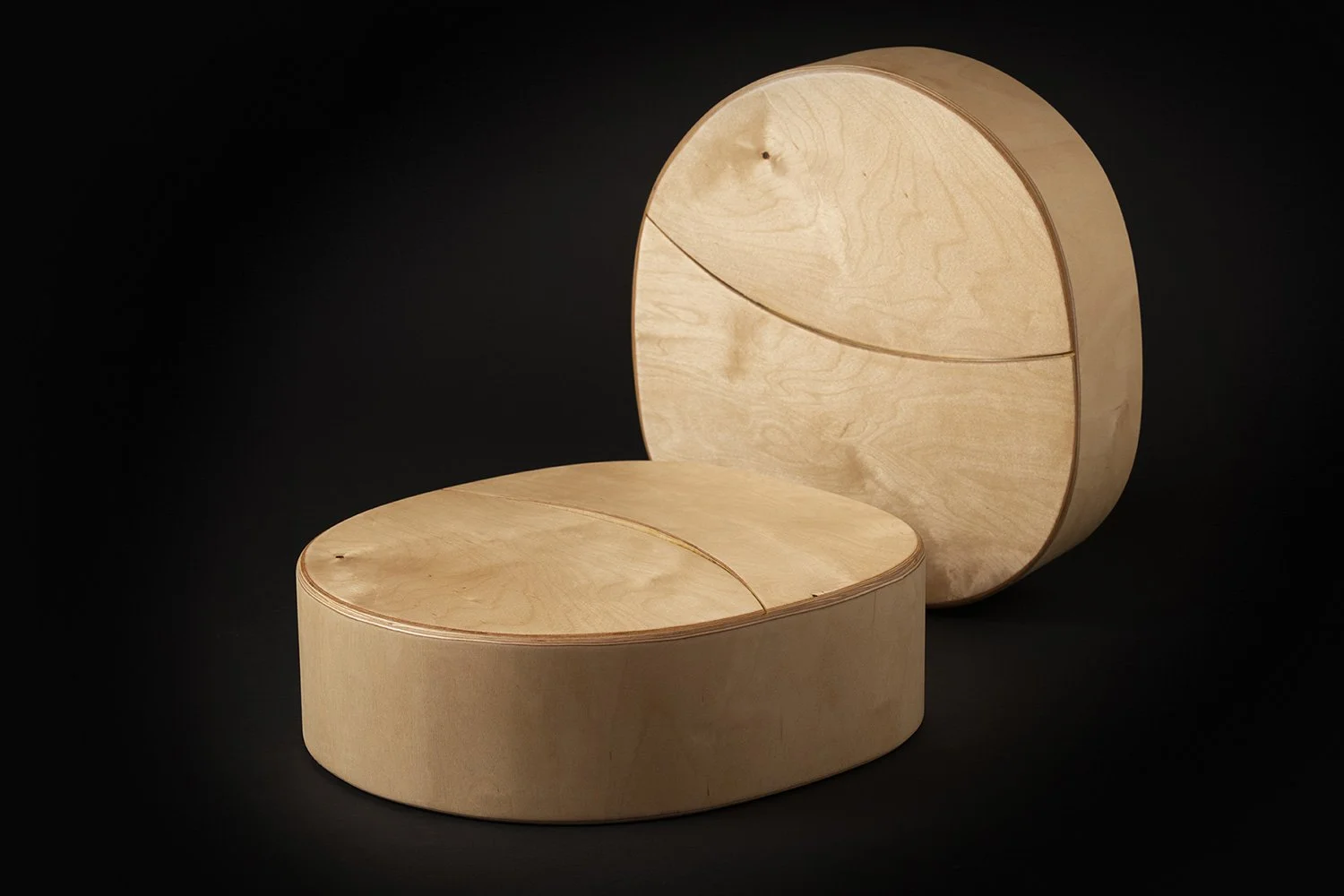
I visited a disability percussion group and asked lots of questions, as well as measuring up the dimensions of a youth's wheelchair. Armed with some solid research, I went away and designed a lap percussion instrument based around the ergonomics of playing whilst in a wheelchair, a chair or sitting up in bed. I have had several attempts to build multifaceted lap percussion instruments and haven’t managed to land the ergonomics. I had a beautifully resolved, triple bongo design, but that is best played between the knees, and too tall for comfortable lap playing for any period of time. Having the parameters of the distance between the armrests of the wheelchair and a comfortable playing height for the hands and wrists, I had the dimensions for my lap bongo cajon hybrid.
So, this is yet another unexpected byproduct of my chassis system: the versatility of possible applications. The gift of having strict parameters seems to always lead to something new.